
Mountain weather changes fast. The figures here are typical ranges, not forecasts — your guide watches the conditions every day.
Five climate zones in one climb
Kilimanjaro rises from about 800 metres to 5,895 metres, so you pass through five climate zones. Temperature falls by roughly 6–7°C for every 1,000 metres you climb.
| Zone | Altitude | What to expect |
|---|---|---|
| Cultivated foothills | 800 – 1,800 m | Warm days, around 20–30°C; farms, coffee and banana groves |
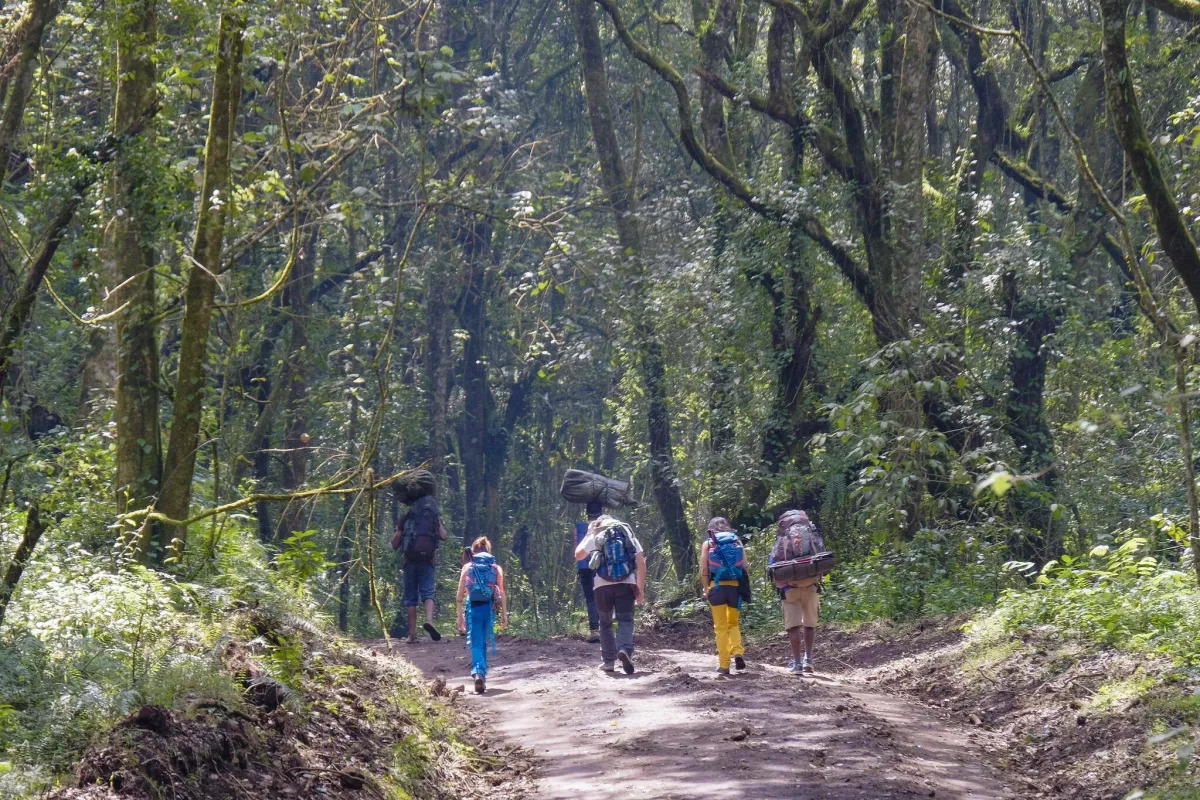
| Rainforest | 1,800 – 2,800 m | Humid and mild; mist and rain are common, even in the dry season |
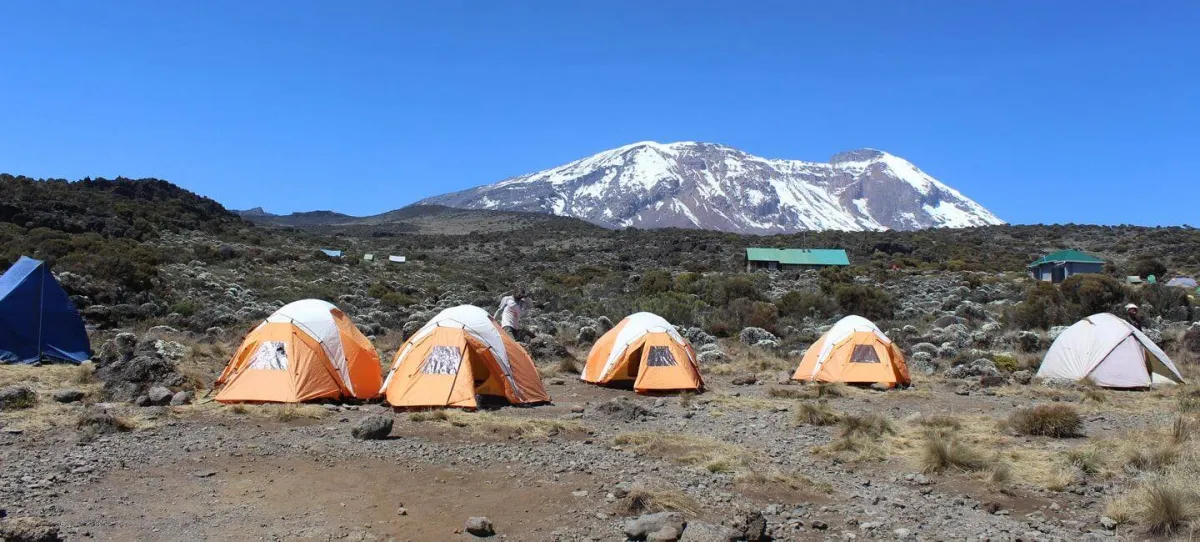
| Heath and moorland | 2,800 – 4,000 m | Sunny, cool days; nights near or below freezing |
| Alpine desert | 4,000 – 5,000 m | Strong sun by day, hard frost at night; dry and windy |
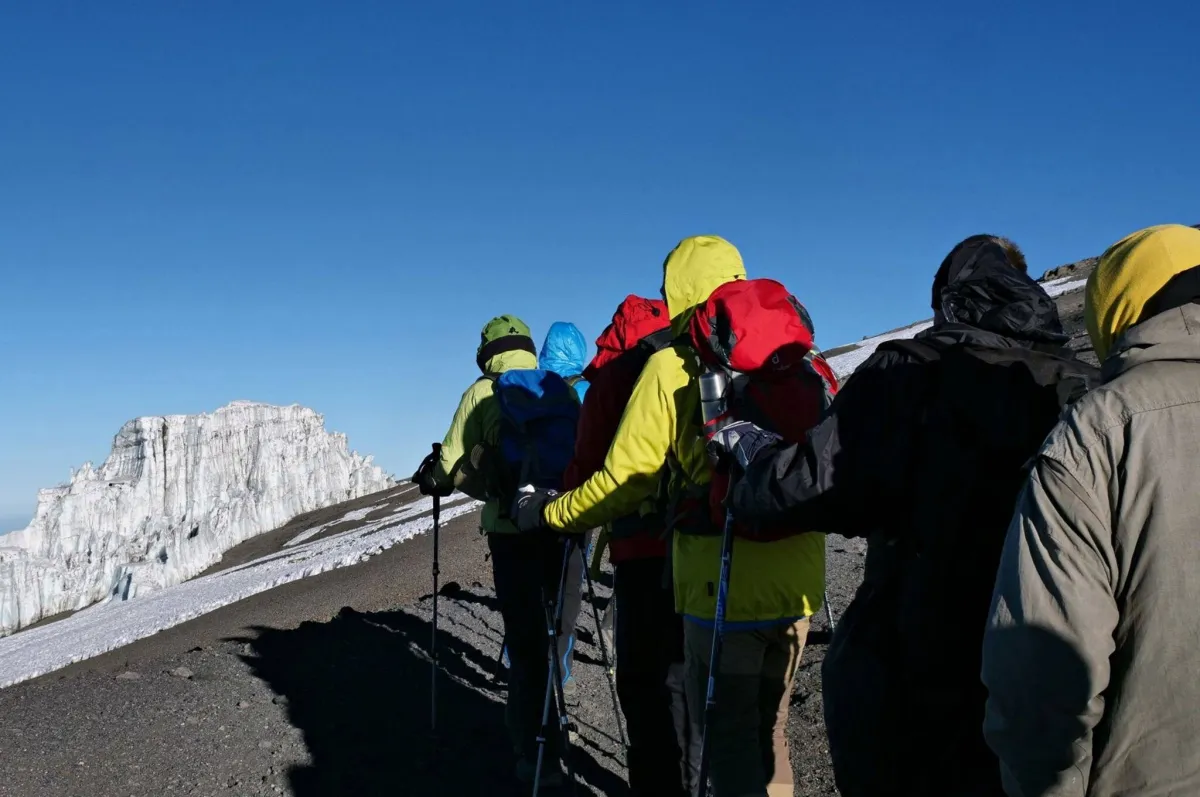
| Arctic summit | above 5,000 m | Ice, snow and scree; well below freezing at night |
How cold is the summit?
On summit night, between Barafu Camp and Uhuru Peak, temperatures are typically between about −7°C and −20°C, and the wind can make it feel much colder. Once the sun rises it warms quickly. Good layers, a down jacket, warm mittens and a hat make the difference between a miserable and a magical summit — see the gear list.
Rain and snow
Rain is most likely in the forest zone and in the long rains from mid-March to May, with lighter short rains in November. Higher up, precipitation can fall as snow at any time of year, and the summit area may be snowy after storms. The northern side of the mountain is drier than the southern side.
Sun and wind
At altitude the sun is fierce even when the air is cold: wear sunscreen, sunglasses and a hat every day. Wind picks up on exposed ridges and on the crater rim. The day often starts clear, with cloud building in the afternoon below you — the famous view from above the clouds.
How to dress for it
- Layer up and down through the day: base layer, fleece, insulated jacket, waterproof shell.
- Keep a dry set of clothes for camp and for sleeping.
- Carry rain gear in your daypack every day, whatever the season.
- Use a sleeping bag rated to at least −10°C.
When the weather is at its best: the best time to climb.