
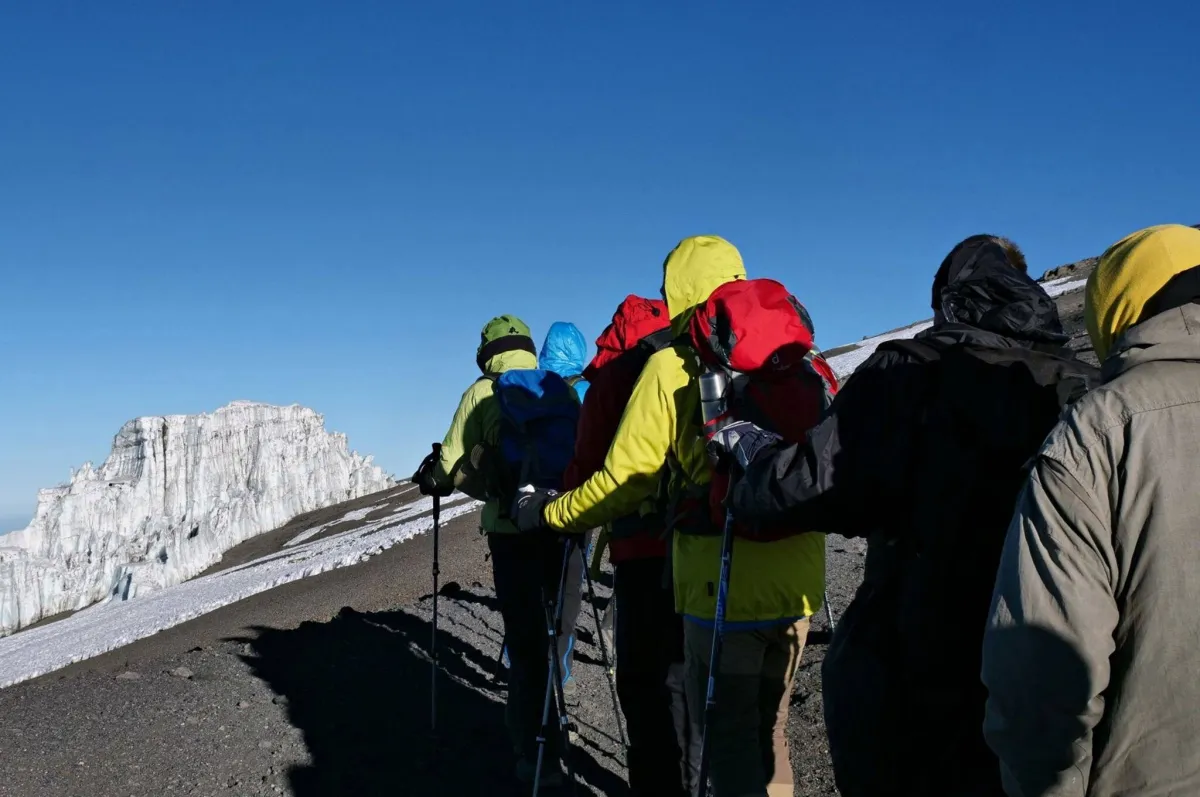
Clothing: think in layers
- Base layers: 2–3 moisture-wicking tops and 1–2 pairs of thermal leggings (merino or synthetic, not cotton)
- Mid layers: a fleece jacket and a light insulated or softshell jacket
- Warm jacket: a down or synthetic insulated jacket for camp and summit night
- Waterproof shell: breathable rain jacket and rain trousers
- Trekking trousers: 2 pairs; zip-off ones are handy in the lower zones
- Insulated trousers or an extra thermal layer for summit night
- Head and hands: sun hat, warm beanie, buff or neck gaiter, thin liner gloves and warm waterproof mittens
- Socks: 4–5 pairs of hiking socks, plus a warm pair for sleeping
Footwear
- Waterproof hiking boots with ankle support, well broken in
- Light shoes or sandals for camp
- Gaiters for mud, scree and snow
Sleeping
- A sleeping bag rated to at least −10°C (comfort rating)
- A sleeping bag liner for extra warmth
- A small travel pillow, if you like one
Ask us whether a sleeping mat is provided on your climb.
Packs and bags
- Daypack of 25–35 litres with a rain cover — you carry this
- Duffel bag for your main kit, carried by a porter; soft bags are easiest to carry. Porters' loads are limited to around 20 kg, so pack light
- Dry bags or plastic-free liners to keep clothes and your sleeping bag dry
Gear
- Headlamp with spare batteries — essential for summit night
- Trekking poles
- Water bottles or a hydration bladder for 3–4 litres (an insulated cover stops it freezing on summit night)
- Sunglasses with good UV protection
- Power bank — cold drains batteries quickly; keep it in your sleeping bag at night
Health and personal items
- High-factor sunscreen and SPF lip balm
- Personal medicines, and altitude medicine if your doctor recommends it
- Blister plasters, painkillers, rehydration salts and a small first-aid kit
- Hand sanitiser, wet wipes, biodegradable toilet paper and a small towel
- Energy snacks you like — appetite drops at altitude
Documents and money
- Passport, visa and travel insurance details covering trekking to 6,000 m
- Cash for crew tips at the end of the climb
Renting gear
Items you will only use once — a sleeping bag, down jacket, gaiters or poles — can be rented in Arusha or Moshi. Bring your own boots, base layers and socks. Ask us where to rent what you need. On our climbs, your guide checks your gear at the briefing the evening before you start, so nothing is missing.
Read more: 10 things every Kilimanjaro trekker needs.