
| Route | Days | Sleeping | Best for |
|---|---|---|---|
| Lemosho | 7–8 | Tents | Scenery, quiet first days, good acclimatisation |
| Machame | 6–7 | Tents | Varied scenery, the most popular camping route |
| Rongai | 6–7 | Tents | A drier, quieter approach from the north |
| Marangu | 5–6 | Huts | Hut beds instead of tents, gentle gradients |
| Umbwe | 6 | Tents | Experienced, fit trekkers — steep and direct |
| Northern Circuit | 8–9 | Tents | The longest, quietest route with the best acclimatisation |
Lemosho Route
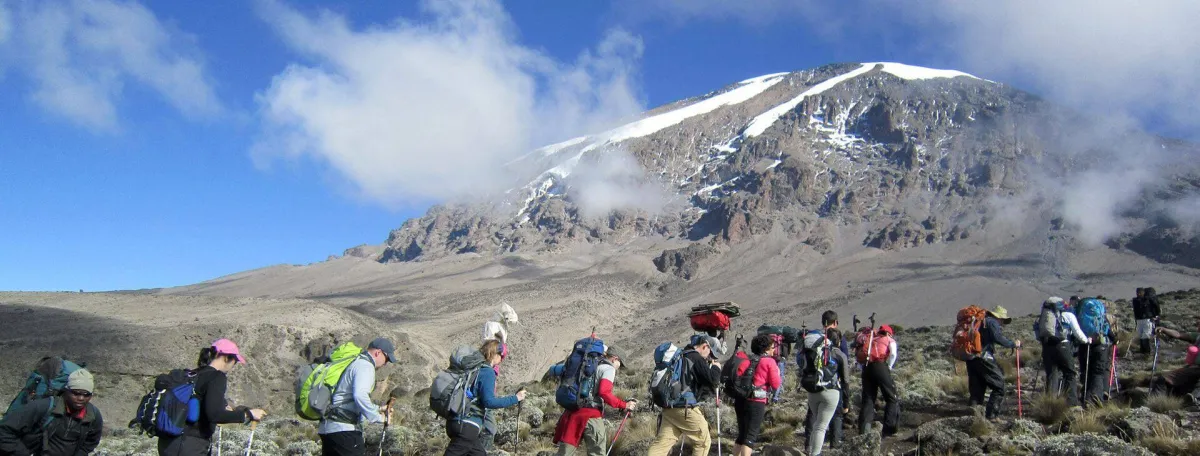
Lemosho starts on the remote western side, climbing through rainforest to the wide Shira Plateau, then joins the southern circuit. Its first days are quiet and very beautiful, and its length gives your body time to adjust — which is why many guides rate it the best all-round route. Our 7-day Lemosho climb crosses the Shira Plateau and continues via Lava Tower (4,630 m) and Barranco Camp to Barafu Camp before the summit.
Machame Route
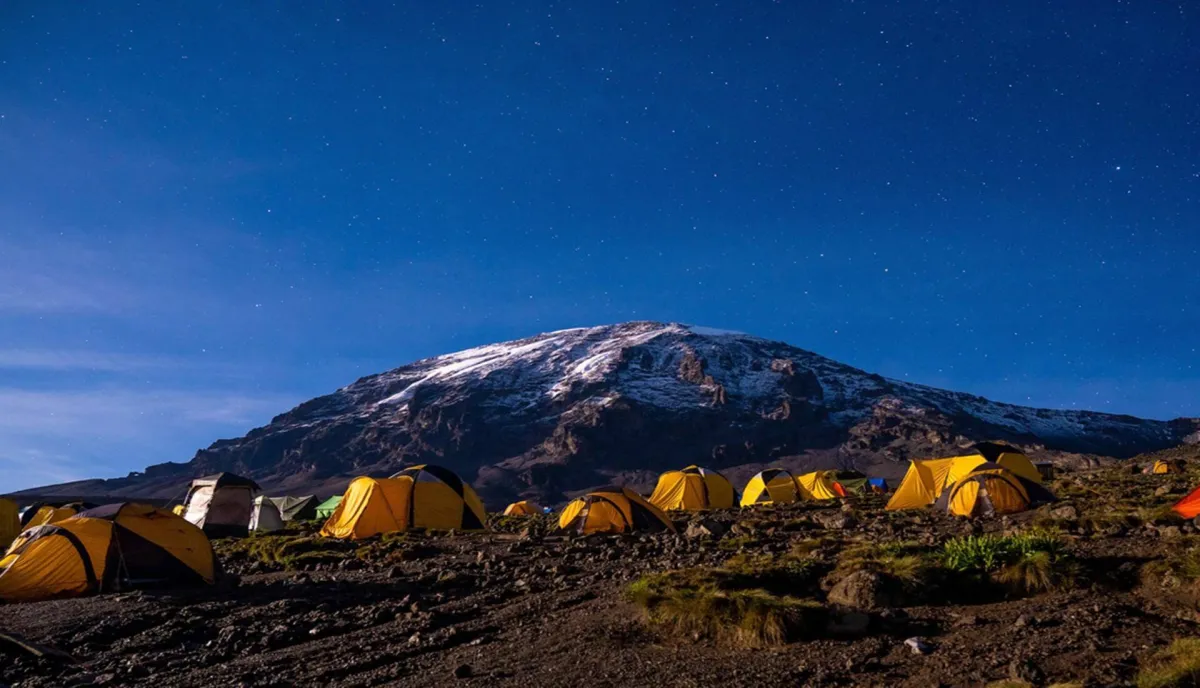
Nicknamed the "Whiskey route", Machame climbs from the south through forest and moorland, then follows the southern circuit under the glaciers: Lava Tower, the Barranco Wall, Karanga and Barafu Camp. Climbing to Lava Tower and sleeping lower at Barranco follows the "climb high, sleep low" rule that helps acclimatisation. It is popular, so camps can be busy in the high season. See our 6-day Machame climb; a seventh day improves your chances further.
Rongai Route
Rongai approaches from the north, close to the Kenyan border. This side of the mountain is drier, so it is a good choice in the rainy months, and it is far less crowded. The scenery is gentler than on the southern routes. You come down the Marangu route on the other side.
Marangu Route
The oldest route and the only one with sleeping huts — dormitory beds instead of tents. The gradient is steady and the path well made, but up and down are the same way and the standard itinerary is short. Choosing six days rather than five, with an acclimatisation day at Horombo, makes a big difference.
Umbwe Route
The shortest and steepest way up — a direct climb through the forest on narrow ridges. It gives little time to acclimatise, so it suits fit, experienced trekkers who have been at altitude before. It joins the southern circuit at Barranco.
Northern Circuit and Shira
The Northern Circuit starts like Lemosho, then circles the quiet northern slopes before the summit — the longest route and the best for acclimatisation. The Shira route is similar to Lemosho but starts higher on the plateau by vehicle. Ask us if you would like either.
How to choose
- Best chance of the summit: the longer routes — Lemosho, the Northern Circuit or a 7-day Machame.
- Prefer a bed to a tent: Marangu, with an extra acclimatisation day.
- Rainy season or want quiet: Rongai.
- Experienced and short on time: Umbwe.
Compare our climbs and prices on Kilimanjaro trekking.