
If you have a heart or lung condition, high blood pressure or any other health concern, see your doctor before you start training and before you book.
How fit do you need to be?
Kilimanjaro is not a technical climb, and people of many ages and fitness levels reach the summit. What you need is the stamina to walk for five to eight hours a day, several days in a row, and to manage one very long summit day of 12 hours or more. Fitness does not protect you from altitude sickness — but a fit body copes better with the effort and recovers faster each night.
The best training is hiking
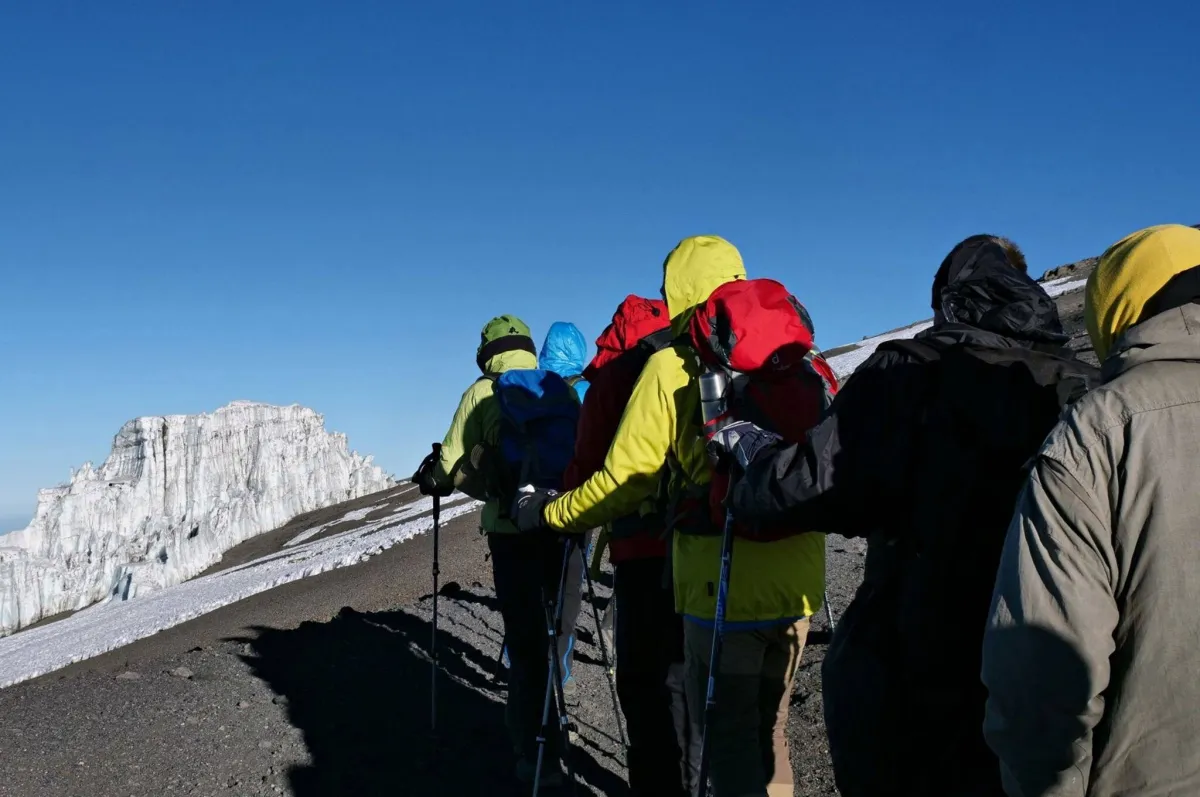
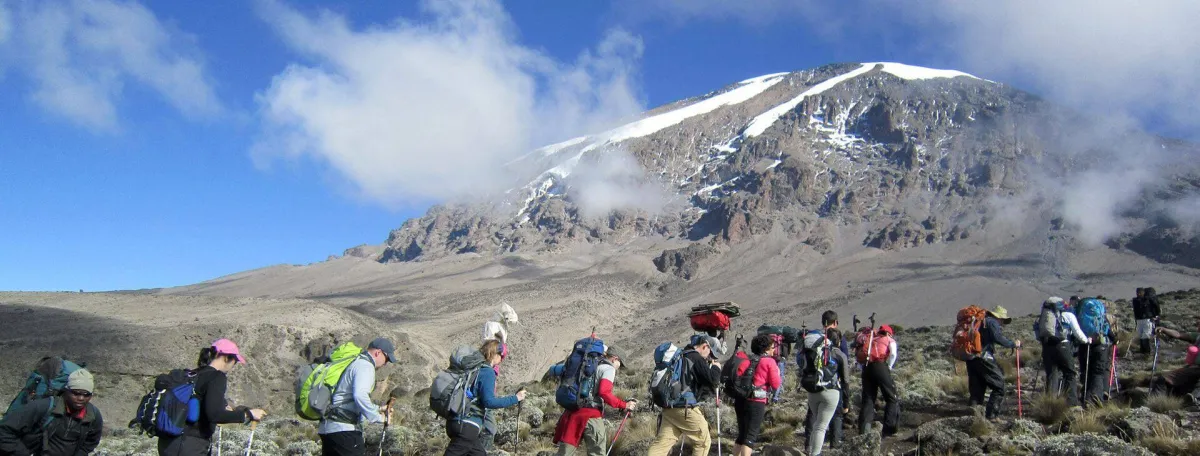
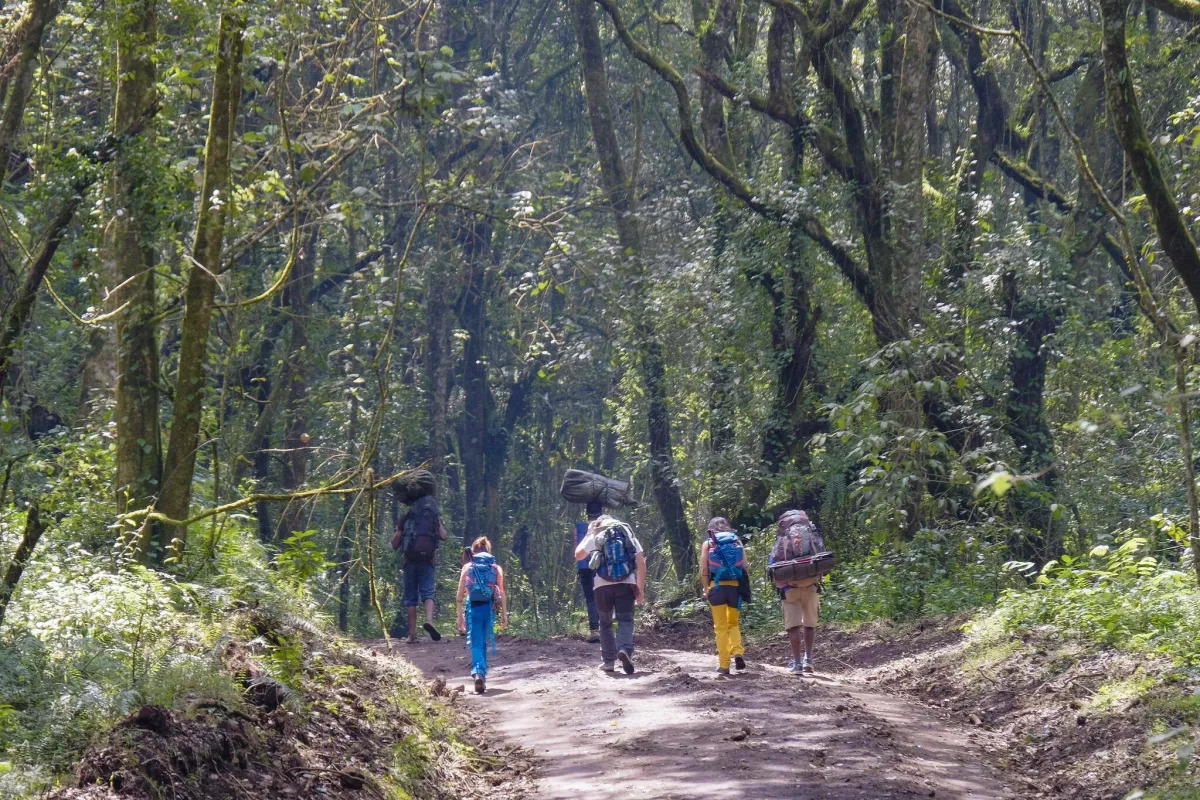
Nothing prepares you like walking uphill with a pack. Aim to hike regularly, building up to long days on hilly ground carrying a daypack of 6–8 kg — the weight you will carry on the mountain.
A simple 12-week plan
| Weeks | Focus |
|---|---|
| 1 – 4 | Build a base: 3–4 sessions a week of brisk walking, cycling or swimming (30–60 minutes), plus one hike of 2–3 hours at the weekend. |
| 5 – 8 | Add hills and weight: longer weekend hikes (4–5 hours) with your daypack, stair or step sessions, and two short strength sessions a week. |
| 9 – 11 | Back-to-back days: hike two long days in a row at the weekend, ideally on hilly or mountain trails, in the boots you will climb in. |
| 12 | Ease off: shorter, easy walks so you arrive rested, not tired. |
Strength that helps
- Squats, lunges and step-ups for the legs — the descent is hard on the knees.
- Core work such as planks for balance with a pack.
- Calf raises for the long climbs.
Get your gear ready while you train
Break in your boots over many weeks of walks — never climb in new boots. Train with the daypack you will carry, and practise with trekking poles if you plan to use them. See the gear list.
Preparing for altitude
You cannot train your body for altitude at sea level. What helps most is the itinerary: more days on the mountain, a slow pace and a route that climbs high and sleeps low. If you can, a few days of hiking at altitude before you come — or climbing Mount Meru first — is excellent preparation. Read about altitude sickness.
Mental preparation
Summit night is long, cold and dark, and the hardest part is often in your head. Know what to expect, trust your guide, take it one step at a time — "pole pole", slowly slowly — and remember why you came.