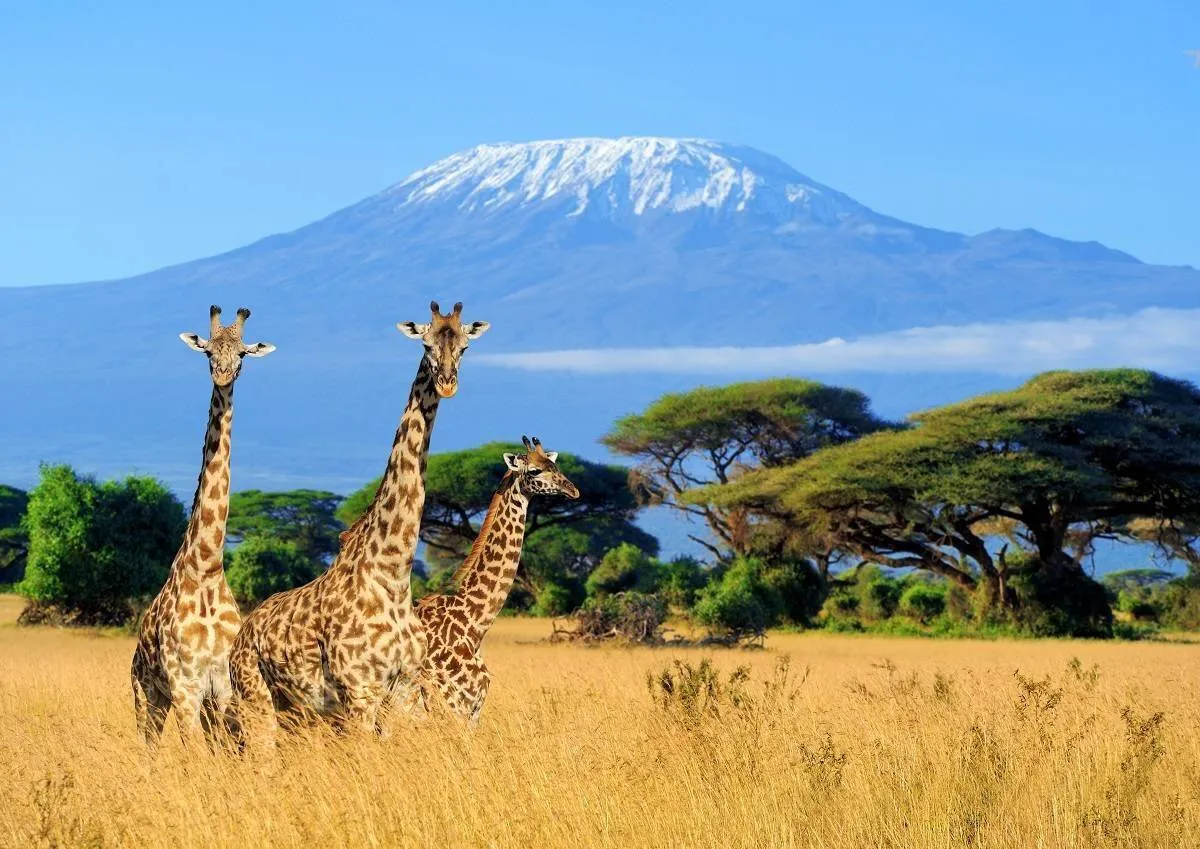

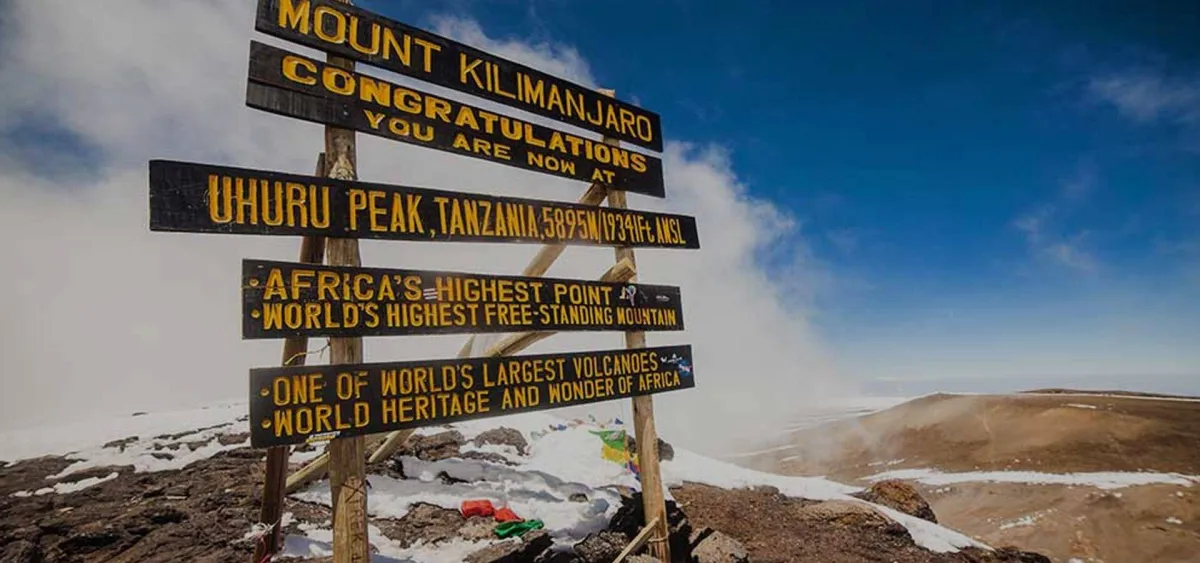
Kilimanjaro in numbers
- Height: 5,895 m (19,341 ft) at Uhuru Peak
- Rise above the plains: about 4,900 m from base to summit
- Three volcanic cones: Kibo (5,895 m), Mawenzi (5,149 m) and Shira (3,962 m)
- One of the Seven Summits: the highest peak on each continent
Uhuru Peak: the Roof of Africa
Uhuru Peak is the highest point on the rim of Kibo, Kilimanjaro's youngest and highest cone. "Uhuru" means freedom in Swahili; the summit was renamed after Tanzania's independence in 1961. The famous wooden sign at the top is where every climber wants a photograph.
Three cones, one mountain
Kilimanjaro is a huge stratovolcano made of three cones. Shira, the oldest, collapsed long ago to form the wide Shira Plateau crossed by the Lemosho and Machame routes. Mawenzi is a jagged, eroded peak to the east, seen from the Marangu and Rongai routes. Kibo is the dormant central cone that holds the summit crater and the glaciers.
The crater rim
Most routes reach the crater rim at one of three points before following it to Uhuru Peak:
- Stella Point (about 5,756 m) — on the Machame, Lemosho, Umbwe and Northern Circuit routes, from Barafu Camp
- Gilman's Point (about 5,685 m) — on the Marangu and Rongai routes, from Kibo Hut
- From Stella Point, it is usually another hour or so along the rim to Uhuru Peak.
Summit night
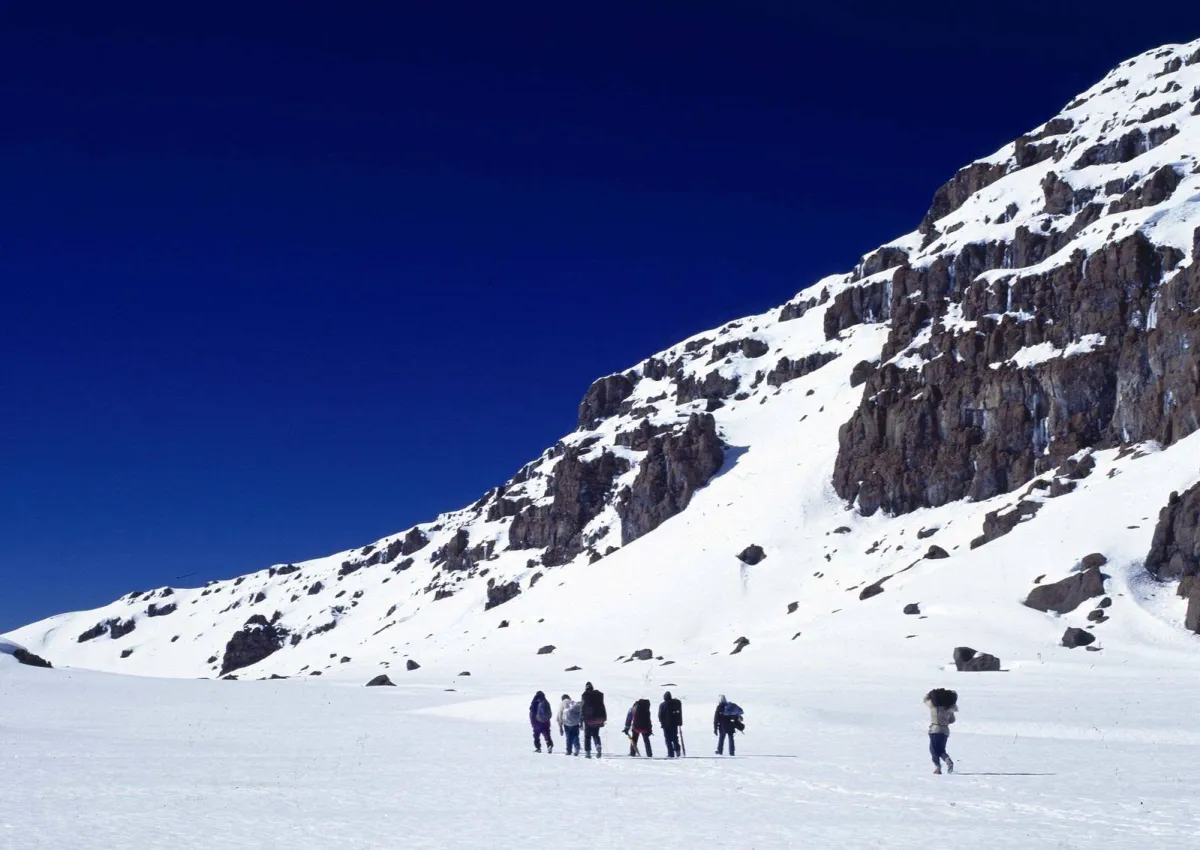
The final climb usually starts around midnight from the high camp at about 4,600–4,700 m. You walk slowly by head-torch up steep scree for six hours or more, reaching the rim around sunrise and Uhuru Peak soon after. You stay only a short time at the top — it is cold and the air is thin — before descending to a lower camp the same day. It is the hardest and most rewarding day of the climb.
How high are the camps?
| Place | Approximate height |
|---|---|
| Machame Camp | 2,980 m |
| Shira Camp | 3,840 m |
| Lava Tower | 4,630 m |
| Barranco Camp | 3,950 m |
| Barafu Camp | about 4,600 m |
| Uhuru Peak | 5,895 m |
| Mweka Camp (descent) | 3,100 m |
These are the heights on our Machame route. Read more about coping with them in altitude sickness, and see 10 fascinating facts about Kilimanjaro.