
Can I climb Kilimanjaro alone?
Not without a guide. Park rules require every climber to go with a licensed guide through a registered operator — you cannot trek independently. But you can absolutely travel solo: either on a private climb with your own crew, or joining a small group of other climbers.
Private climb or group climb?
- Private solo climb: your own guide and crew, your dates, your pace. Every decision is made around you. It costs more, because the crew is not shared.
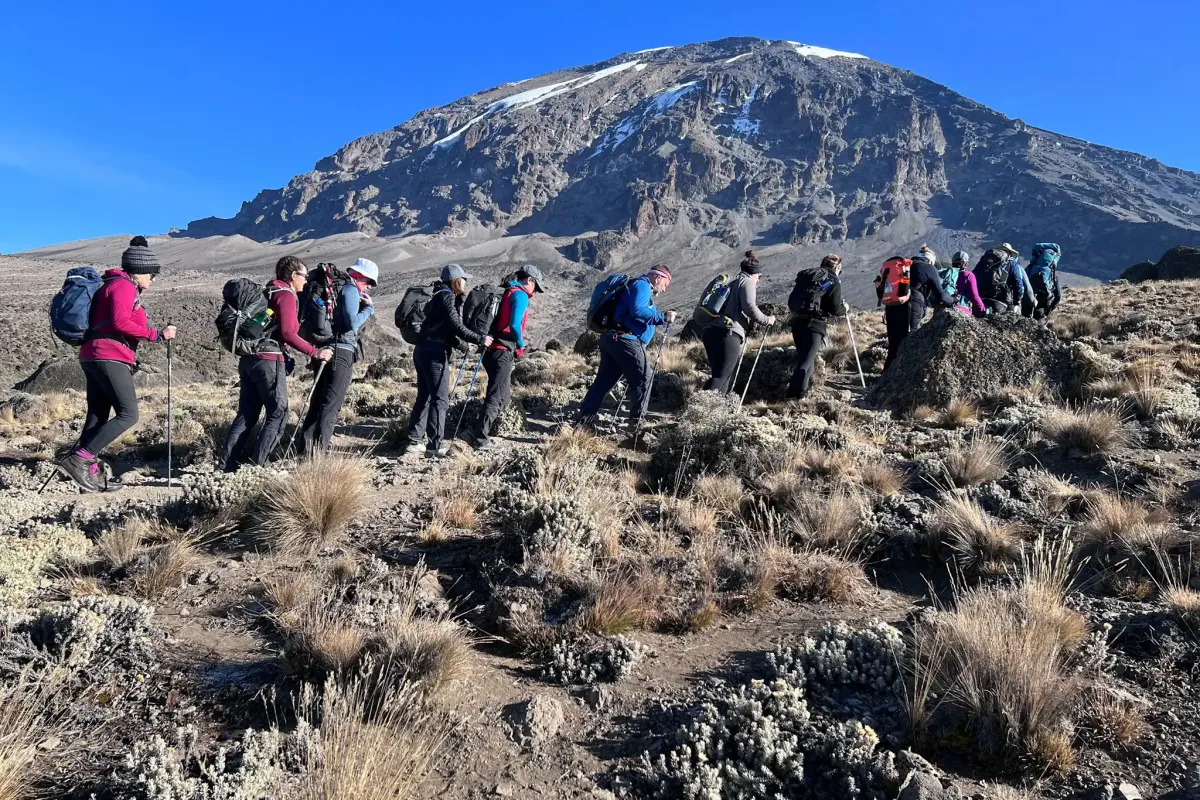
- Joining a group: you climb with other trekkers on set dates and share the cost of the crew. It is cheaper and sociable — summit night with a group can carry you through. You do need to fit the group's dates and route.
What does a solo climb cost?
Kilimanjaro prices are often quoted per person for two or more climbers. Alone on a private climb, you carry the full cost of the guide, cook and crew, plus a single tent — so expect to pay more per person. Joining a group brings the price down. See what a climb costs or ask us for a solo quote.
Is it safe?
Yes. On a private climb you have a guide, an assistant guide on longer routes and a crew with you at all times, and you are never in camp alone. Solo women climb Kilimanjaro regularly. In towns before and after the climb, take normal precautions — see our travel safety guide.
Tips for solo climbers
- Choose a longer route: with no one to compare yourself to, a gentle pace is easier to keep — and it improves your chances.
- Bring entertainment for camp: a book, cards or downloaded podcasts for the evenings.
- Talk to your crew and learn some Swahili — the conversations on the trail are part of the experience.
- Share your itinerary and our contact details with family at home.
- Rest well in Arusha or Moshi before the climb; arrive a day or two early.
Make it a bigger trip
Many solo climbers add a few days of safari or a beach break on Zanzibar after the mountain. Read our solo safari guide.